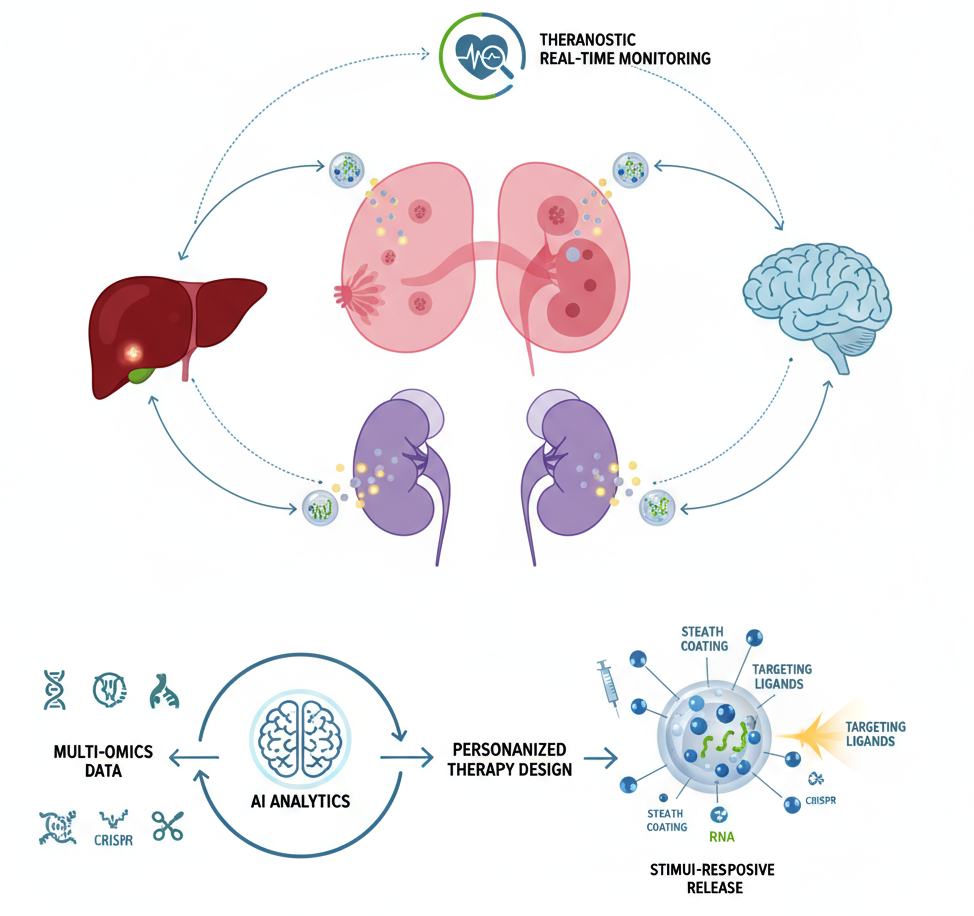
Transforming Cancer Therapy with AI-Integrated Nano medicine: Advances across Liver, Breast, Renal, and Brain Tumors
Keywords:
AI-integrated nanomedicine; precision oncology; smart nanocarriers; multi-omics; hepatocellular carcinoma; breast cancer; renal cell carcinoma; glioblastoma; targeted therapy; theranostics.Abstract
Background: Conventional cancer therapies are limited by systemic toxicity, poor specificity, and tumor heterogeneity. The convergence of nanomedicine, artificial intelligence (AI), and multi-omics profiling offers transformative potential for personalized oncology. Objectives: This review summarizes advances in AI-integrated nanotherapeutics between 2019 and 2024, highlighting strategies across liver, breast, renal, and neuro cancers, and examines their translational status, clinical potential, and future directions. Methods: Literature from 2019–2024 was systematically analyzed, focusing on smart nanocarrier design, payload engineering (chemotherapeutics, RNA, CRISPR-Cas, immunomodulators), AI-driven target identification, patient stratification, and clinical trial integration. Multi-omics data (genomics, transcriptomics, proteomics, metabolomics, single-cell analyses) were reviewed for their role in guiding personalized therapy. Results: Smart Nano carrier’s lipid-based, polymeric, inorganic, biomimetic, and exosome-derived enable precise delivery of multi-modal therapeutics. AI enhances nanoparticle design, predicts therapeutic response, and informs patient-specific treatment selection. Integration of multi-omics data allows for adaptive, individualized therapy, improving tumor targeting, overcoming resistance, and optimizing combination strategies. Early-phase clinical trials demonstrate feasibility, safety, and preliminary efficacy across all four cancer types. Conclusions: AI-integrated nanomedicine, guided by multi-omics insights, represents a paradigm shift in precision oncology. These approaches enable personalized, adaptive, and multifunctional cancer therapies, with the potential to transform clinical outcomes in liver, breast, renal, and neuro cancers. Future research should focus on scalable manufacturing, robust safety validation, ethical implementation, and global clinical adoption.