Bridging Nanotechnology and Artificial Intelligence in Oncology: Emerging Paradigms for Breast, Renal, and Neuron Cancers
Keywords:
nanomedicine; artificial intelligence; breast cancer; renal cell carcinoma; glioblastoma; precision oncology; multi-omics.Abstract
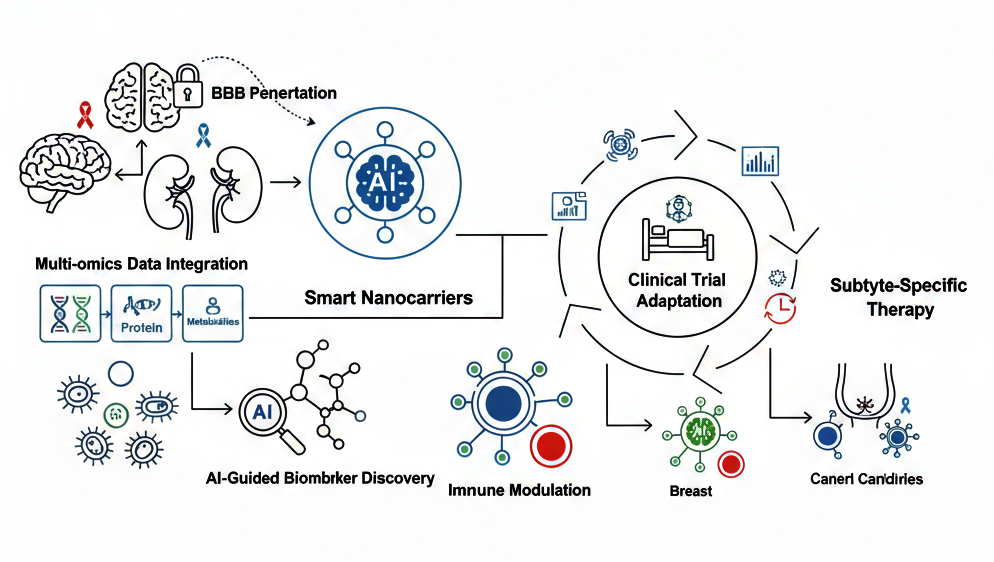
Background: Cancer management in breast, renal, and neuro-oncological settings continues to be limited by resistance, heterogeneity, and therapy-associated toxicity, highlighting the urgent need for innovative treatment strategies.Objective: This review synthesizes recent (2019 2024) advances in artificial intelligence (AI) integrated nanomedicine for breast cancer, renal cell carcinoma (RCC), and neuro-oncological malignancies, with an emphasis on therapeutic innovation and translational progress.Methods: Relevant literature was analyzed, focusing on nanocarrier engineering, AI-guided biomarker discovery, multi-omics integration, and clinical trial outcomes.Results: Subtype-specific nanomedicine approaches in breast cancer, VEGF- and tyrosine kinase inhibitor (TKI) loaded nanocarriers in RCC, and blood brain barrier penetrating systems for glioblastoma have demonstrated encouraging results in both preclinical and early clinical studies. AI applications enhanced biomarker-driven patient stratification, optimized nanocarrier design, and supported adaptive clinical trial frameworks.Conclusion: The convergence of nanotechnology and AI represents a disruptive frontier in oncology, with the potential to enable highly personalized, durable, and safe therapeutic interventions across diverse cancer types.