Biotechnological Evaluation of the Neuroprotective Activity of Centella asiatica in Parkinson’s Disease Using Cell-Based and Behavioral Models
Keywords:
Centella asiatica; Parkinson’s disease; Neuroprotection; Asiaticoside; Madecassoside; Oxidative stress; Mitochondrial dysfunction; Neuroinflammation; NLRP3 inflammasome; Dopaminergic neurons; Behavioral models; Cell-based assays; Antioxidant activity; Mitoprotection; Neurotrophic factorsAbstract
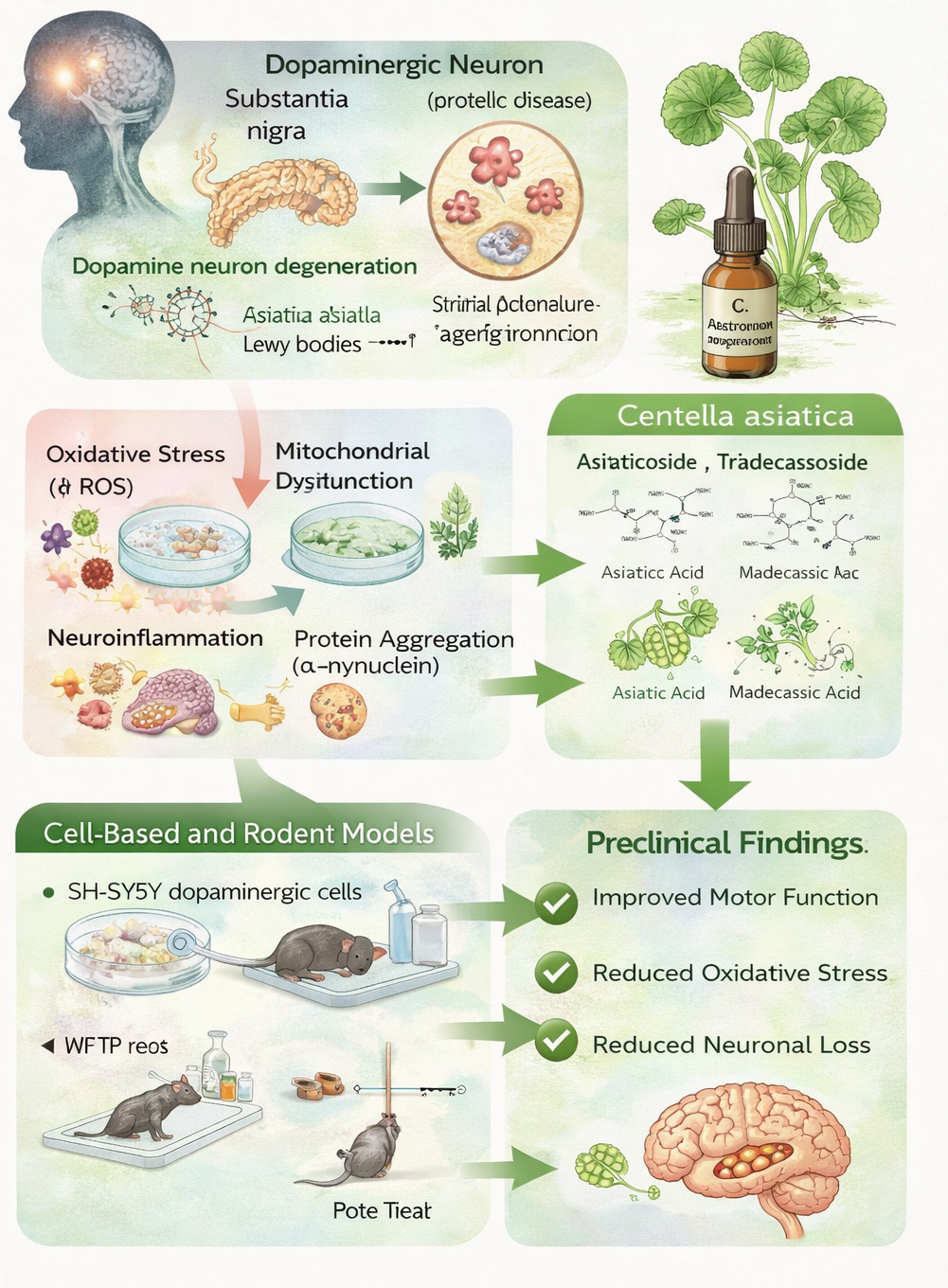
Parkinson’s disease (PD) is a progressive neurodegenerative disorder characterized by the selective loss of dopaminergic neurons in the substantia nigra pars compacta, striatal dopamine depletion and aggregation of misfolded α-synuclein into aggregates (Lewy bodies). Increasing evidence suggests that oxidative stress, mitochondrial dysfunction, neuroinflammation and disrupted protein homeostasis all play key roles in PD pathogenesis. Currently available therapies, such as dopaminergic medications and deep brain stimulation, deliver symptomatic relief without addressing the progression of the disease are frequently accompanied by adverse effects. These limitations underscore the necessity for innovative neuroprotective strategies that are able to alter disease progression. Centella asiatica (L.) Urb. (family Apiaceae) is an ethnomedicinal herb commonly used for cognition enhancement, anxiety reduction and tissue repair. Its main bioactive components such as asiaticoside, madecassoside, asiatic acid and madecassic acid have antioxidant, anti-inflammatory, mitochondrial-protective and neurotrophic effects. These pharmacological effects also seem to be particularly relevant to PD pathology, where oxidative damage and chronic inflammation play a part in neuronal degeneration. Neuroprotective potential of C. asiatica has been reported in cell-based and animal models. In vitro studies describe neuroprotection against 6-hydroxydopamine (6-OHDA) and MPP⁺-, as well as inflammatory stimulus-induced neurotoxicity, withrestoration of the redox state and inhibition of apoptosis . Preclinical studies observe reduced neuronal loss,decreased oxidative stress and improved motor function in MPTP- and 6-OHDA-induced rodent models.Inconclusion, C. asiatica has displayed a neuroprotective effect via mitochondrial health and enhancement ofantioxidants and anti-inflammatory mechanisms. Nevertheless, additional studies focused on pharmacokinetics aswell as on extract standardization and clinical validation are needed to confirm its therapeutic implication inParkinson’s disease.