Nanoparticle-Enabled mRNA Delivery: Overcoming Biological Barriers for Next-Generation Therapeutics
Keywords:
mRNA therapeutics; Lipid Nanoparticles (Lnps); Polymeric Nanoparticles; Nanomedicine; RNA Delivery; Self-Amplifying Mrna; Circular RNA; Microfluidics; Targeted Delivery; Endosomal Escape; Personalized Vaccines; Cancer Immunotherapy; Regenerative Medicine; CRISPR Mrna; Pharmaceutical Engineering.Abstract
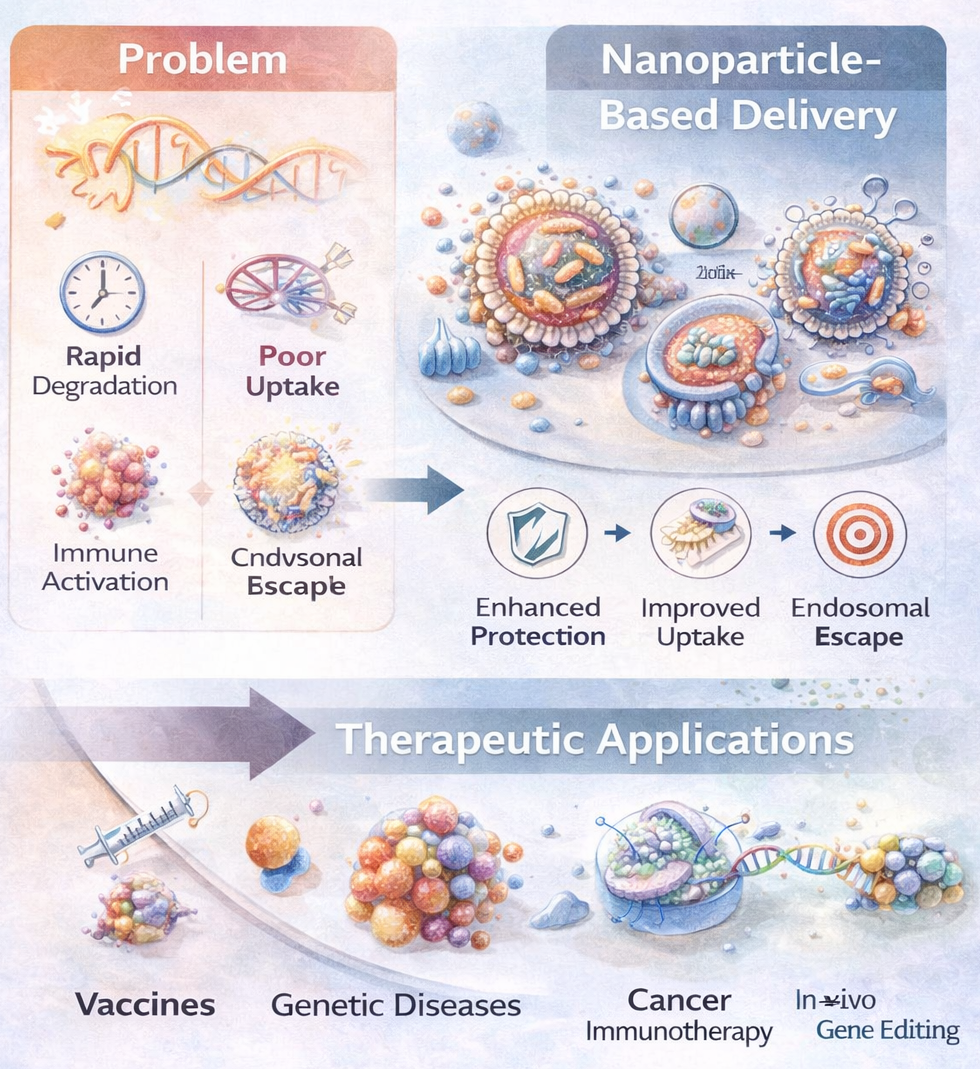
mRNA–nanoparticle complexes are rapidly reshaping modern therapeutics, blending the programmability of mRNA with the precision and protection offered by advanced nanocarriers. While mRNA provides a flexible, software-like approach to generating therapeutic proteins, its fragility and immunogenicity demand sophisticated delivery systems. Nanoparticles especially lipid, polymeric, hybrid, and bioinspired platforms shield mRNA from enzymatic degradation, enhance cellular uptake, enable endosomal escape, and support targeted or controlled release. Recent engineering breakthroughs in microfluidics, AI-guided design, nucleoside modification, and surface functionalization have dramatically improved the stability, potency, and safety of mRNA formulations. These technologies now power applications ranging from vaccines and cancer immunotherapy to rare-disease treatments, regenerative medicine, and in vivo gene editing. Despite challenges in large-scale manufacturing, long-term safety assessment, and cold-chain dependence, ongoing innovation is pushing mRNA nanomedicine toward more durable, personalized, and globally accessible therapies. Together, mRNA–nanoparticle systems stand at the forefront of next-gen precision medicine, promising fast, customizable solutions for previously untreatable conditions.