CRISPR Therapeutics: Bridging Molecular Mechanisms and Advanced Delivery Systems for Precision Medicine
Keywords:
CRISPR-Cas9; Gene editing; Pharmacological mechanisms; Drug delivery; Lipid nanoparticles; Off-target effects; Precision medicine; Nanocarriers; Genome engineeringAbstract
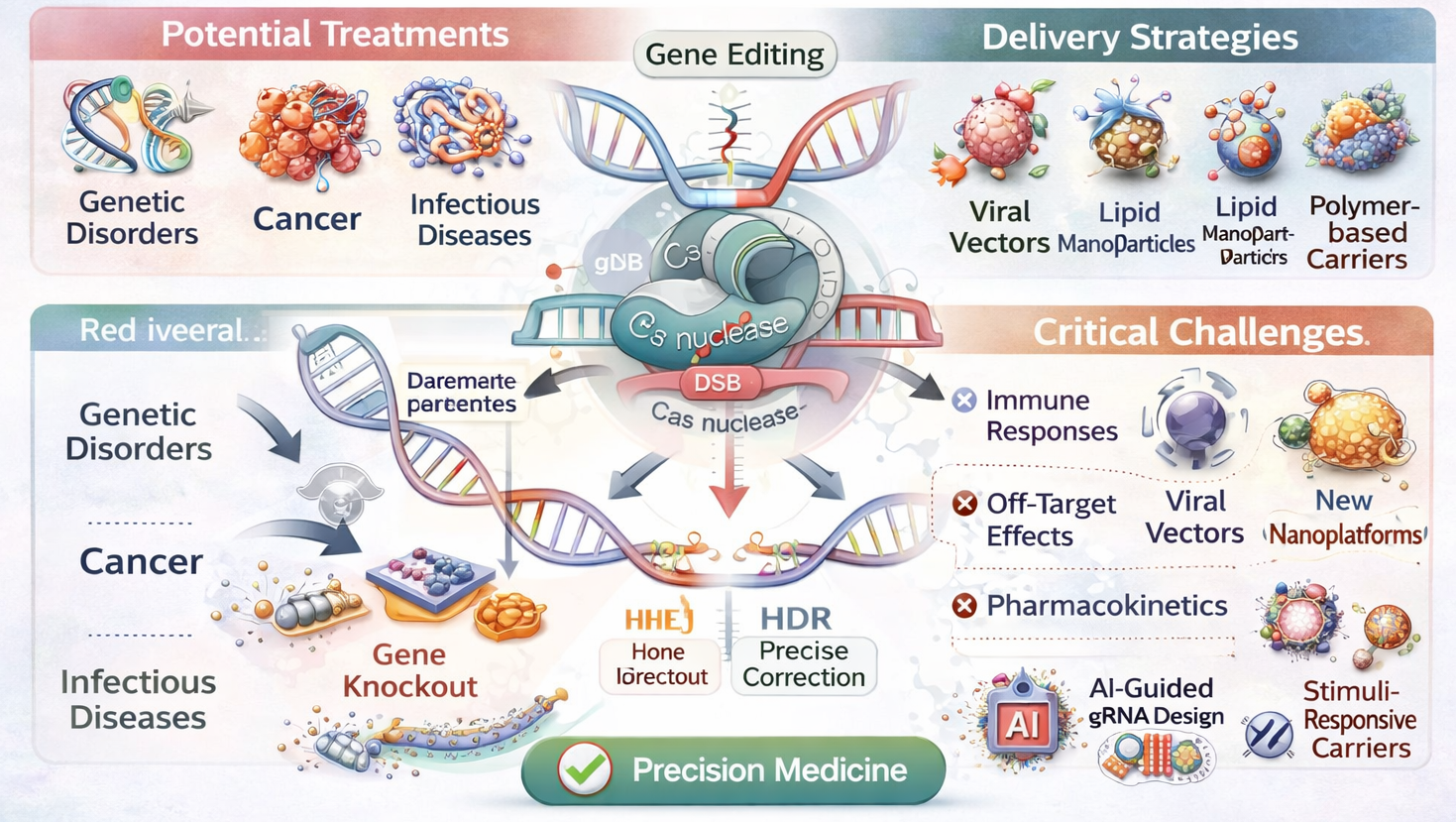
CRISPR-based therapeutics have emerged as a transformative approach in modern medicine, enabling precise and programmable modification of disease-associated genes at the genomic level. Unlike conventional pharmacological interventions that primarily target proteins, CRISPR-Cas systems offer the potential for permanent correction of genetic abnormalities, thereby expanding therapeutic possibilities for genetic disorders, cancer, and infectious diseases. This review provides a comprehensive overview of the pharmacological mechanisms underlying CRISPR-mediated gene editing, including target recognition, double-strand break induction, and subsequent repair via non-homologous end joining (NHEJ) or homology-directed repair (HDR). Despite its significant promise, the clinical translation of CRISPR therapeutics is constrained by several critical challenges, particularly in the safe and efficient delivery of CRISPR components. Various delivery strategies, including viral vectors, lipid nanoparticles, polymeric carriers, and emerging nanoplatforms such as exosomes and gold nanoparticles, are discussed with respect to their efficiency, specificity, and immunogenicity. Additionally, concerns related to off-target effects, immune responses, and pharmacokinetic behavior are critically examined. Advances in pharmaceutical formulation, including encapsulation techniques, controlled release systems, and targeted delivery approaches, have improved the stability and bioavailability of CRISPR components. Emerging strategies such as AI-guided guide RNA design, stimuli-responsive carriers, and combination therapies are further enhancing precision and therapeutic outcomes. Overall, CRISPR-based therapeutics represent a paradigm shift toward precision medicine; however, overcoming delivery barriers, ensuring safety, and addressing regulatory and ethical considerations remain essential for successful clinical translation.