Advances in Translational Nanomedicine for Precision Oncology: From Multistage Targeting to AI-Driven Personalized Cancer Therapy
Keywords:
Nanomedicine; Cancer therapy; Liver cancer; Breast cancer; Kidney cancer; Brain cancer; Biomimetic nanoparticles; Stimuli-responsive delivery; Theranostics; Artificial intelligence; Microfluidics; Precision oncologyAbstract
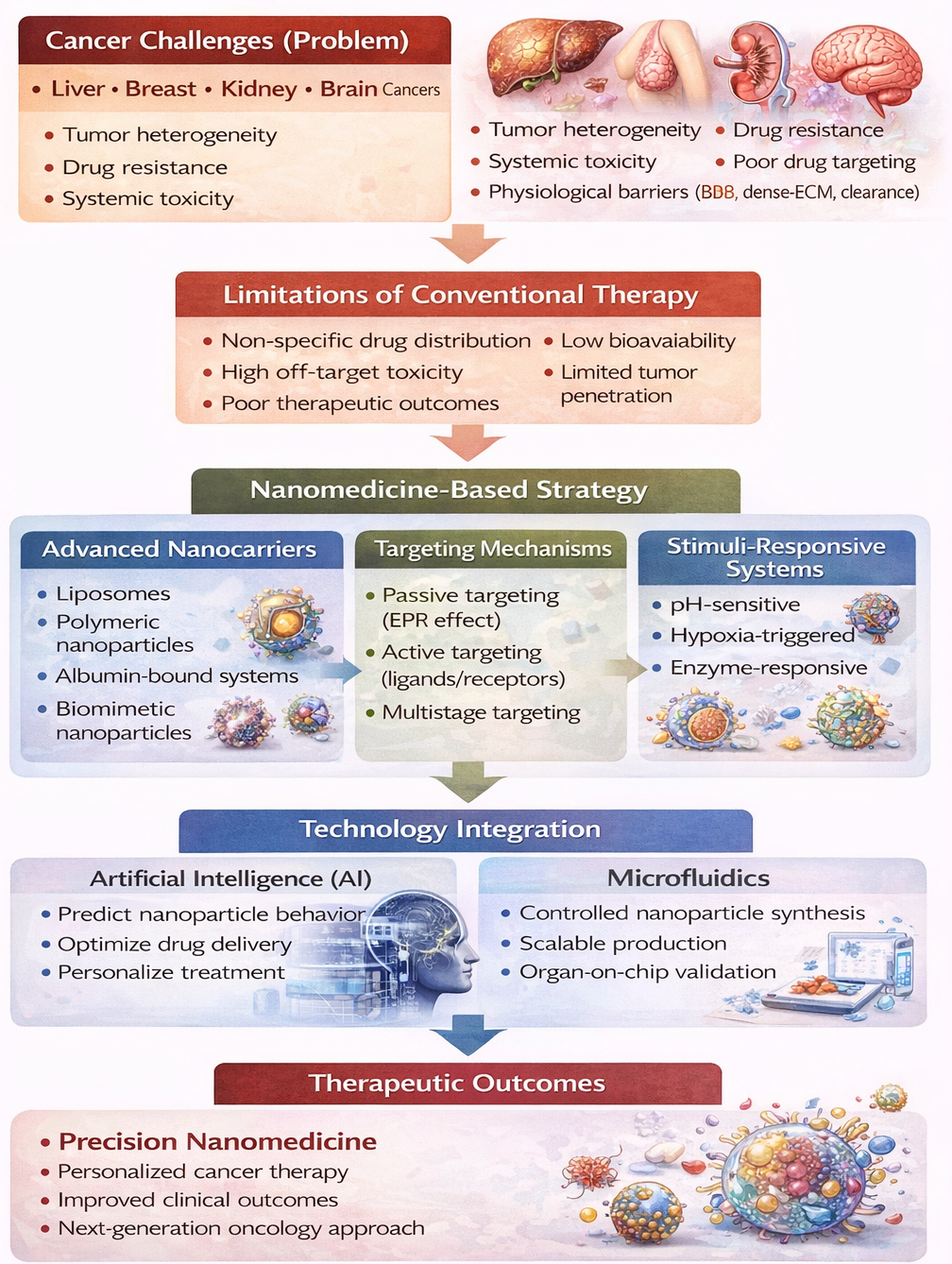
Background: Cancer remains a leading cause of global mortality, with liver, breast, kidney, and brain malignancies posing significant therapeutic challenges due to tumor heterogeneity, systemic toxicity, and drug resistance associated with conventional treatments. Aim: This review evaluates recent advancements in nanomedicine, emphasizing translational innovations and the integration of artificial intelligence (AI) and microfluidics for personalized cancer therapy. Methods: A systematic literature review was conducted following PRISMA guidelines using PubMed, Scopus, Web of Science, and ClinicalTrials.gov. Studies included preclinical investigations, clinical trials, and translational research focusing on nanomedicine-based interventions. Data on nanocarrier design, targeting strategies, therapeutic efficacy, safety, and translational potential were analyzed, along with AI-driven optimization and microfluidic fabrication approaches. Results: Advanced nanocarriers demonstrated enhanced therapeutic efficacy through multistage targeting and stimuli-responsive drug release triggered by tumor microenvironmental factors such as pH and hypoxia. Biomimetic nanoparticles improved immune evasion and tumor targeting. Clinically approved systems, including liposomal doxorubicin and albumin-bound paclitaxel, showed improved safety and treatment outcomes. Theranostic platforms enabled real-time monitoring and adaptive therapy. AI-based models optimized nanoparticle design and drug delivery kinetics, while microfluidic systems ensured scalable and reproducible synthesis. Conclusion: Nanomedicine has evolved into a clinically relevant strategy in oncology, offering precise and multifunctional drug delivery. The integration of AI and microfluidics is accelerating the development of patient-specific therapies, marking a shift toward personalized and data-driven cancer treatment.